
Sump Pump Repair, Replacement and Backup Systems
A sump pump is a machine that sits in water and does nothing for months at a time, and then one night everything depends on it. The failures we get called for are almost never a surprise — they're a pump that had been telling somebody for a while.
Test yours in about a minute
Pour a bucket of water into the sump pit until the float rises. The pump should kick on, move the water out, and shut off cleanly. Then go outside and confirm the water is actually coming out of the discharge line.
If it hums but doesn't move water, if the float sticks, if it runs and runs after the pit is empty, or if nothing happens at all — that's your warning, and you got it on a dry day instead of during a storm.
Do this twice a year. Spring, before the wet season, and fall.
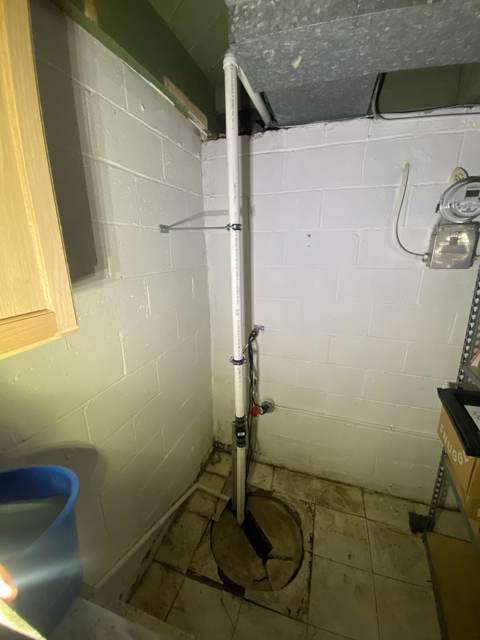
A recent replacement
Our own installs, photographed by the crew on the job. Locations shown by town only.
What goes wrong
The float. The single most common failure. It sticks against the pit wall, or debris blocks it, and the pump either never starts or never stops.
The check valve. If it fails, everything the pump just pushed up the pipe drains straight back into the pit, and the pump cycles over and over until it burns out.
A frozen or blocked discharge. In winter the outside end of the line can freeze shut. The pump runs, has nowhere to send the water, and overheats.
Age. Most residential sump pumps last somewhere around seven to ten years. If yours came with the house and the house isn't new, assume it's near the end.
Power. The worst storms take the power out. A pump with no electricity is a decoration.
Battery backup, honestly
A backup system is a second pump on a battery that takes over when the primary fails or the power goes out. Whether it's worth it comes down to one question: what's in your basement?
Finished space, a furnace, a water heater, stored belongings — a backup is cheap insurance. An empty concrete basement with a floor drain, less so. We'll tell you which situation you're in rather than selling everyone the same package.
Where the water is going
Your discharge line has to put water somewhere it won't come back. We check that the line runs far enough from the foundation, that it isn't tied into anything it shouldn't be, and that the outside end isn't buried, crushed or aimed at your neighbor's yard.
Frequently asked questions
How long does a sump pump last?
Roughly seven to ten years for a typical residential pump. Ones that run constantly wear out sooner.
My pump runs all the time. Is that bad?
It's either a high water table doing its job, or a failed check valve making the pump move the same water repeatedly. Worth diagnosing — the second one destroys pumps.
Should I get a battery backup?
If losing the basement would cost you real money or real belongings, yes. If it's bare concrete with a floor drain, probably not. We'll give you a straight answer for your house.
Can I replace a sump pump myself?
Some homeowners do. The parts that go wrong are the check valve, the float and the discharge connection — get any of those wrong and you find out during a storm. If you want it done once, call us.
Do you install sump pumps for finished basements?
Yes, including sealed lids and quieter setups where the pit is in living space.