
Water Heater Repair & Replacement in Anne Arundel County
No hot water this morning, or hot water that runs out halfway through a shower — either way, you want a straight answer about whether this thing can be fixed or whether you're buying a new one. That's the first thing we'll tell you.
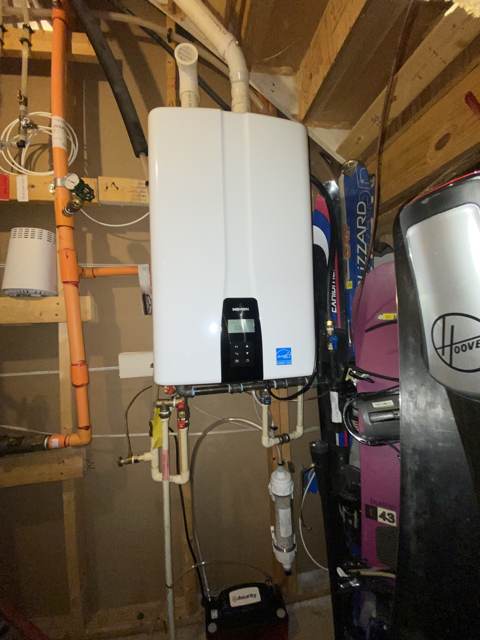
What a standard installation includes
- Removal and disposal of the existing heater
- Standard installation labor
- Permit, if required
- Expansion tank and pressure gauge
- Drain pan, if required
- Full-port ball valve
- New dielectric connections and standard fittings
- Gas connector or electrical reconnection where applicable
- Venting modifications where shown on your quote
- Mayes Plumbing 1-year workmanship warranty (retail and commercial work)
Standard means a like-for-like replacement with reasonable access and compatible existing utilities. Extended piping, venting, new circuits, structural changes, difficult access or code corrections beyond that scope are quoted separately — and you'll see them on the quote before the work starts.
How old is yours? Here's where to look.
Before you call anyone, find the label on the side of the tank. The serial number tells you the year it was built — most manufacturers encode it in the first four characters. If it's over ten years old and it's leaking from the tank itself, no repair is going to save it. If it's eight years old and the pilot won't stay lit, that's usually a part.
Knowing the age before you call saves everyone time, and it tells you whether the person quoting you a full replacement is being straight with you.
What we actually see go wrong
No hot water at all. On a gas heater that's usually the thermocouple, the gas control valve, or the pilot assembly. On electric it's usually a heating element or a thermostat. All of those are repairs, not replacements.
Hot water runs out fast. Often sediment. Years of Maryland well and municipal water leave a layer of mineral on the bottom of the tank that acts like insulation between the burner and the water. Sometimes a flush buys you time; sometimes the tank is too far gone.
Water around the base. Track where it's actually coming from before you panic. A leaking drain valve or a dripping temperature-and-pressure relief line is a repair. Water weeping from the tank seam is the end of the road — the glass lining has failed and there's no fixing it.
Rumbling or popping. Sediment again, boiling underneath. Not dangerous today, but it's the tank telling you its remaining life is short.
Rusty hot water. Usually the anode rod is spent and the tank has started sacrificing itself. Replacing an anode rod on a heater that's still young can add years. On an old tank it's throwing good money after bad.
Repair or replace?
We'll give you the honest version. Roughly: if the tank itself is sound and the failure is a part, repair almost always wins. If the tank is leaking, or it's past about twelve years and something significant has failed, replacement is the better spend. We'll show you what we found and let you decide.
Tank vs. tankless, without the sales pitch
A standard tank is cheaper to install, simpler to service, and every plumber in Maryland can work on one. It holds a fixed amount of hot water and it takes time to recover once you drain it.
Tankless gives you unlimited hot water and takes up almost no space. It also costs meaningfully more to install, usually needs a larger gas line and different venting, and needs descaling on a schedule — especially on well water. It's a good fit for some houses and a bad fit for others.
If someone tells you tankless is always better, they're selling. We'll tell you which one makes sense for your house, your gas supply and how your family actually uses hot water.
Tankless installs
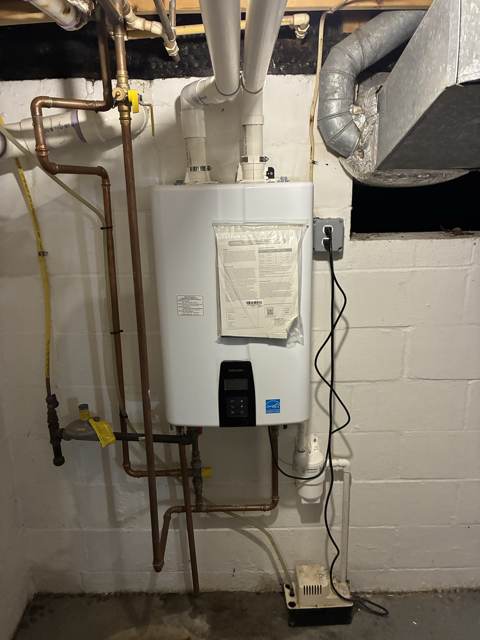
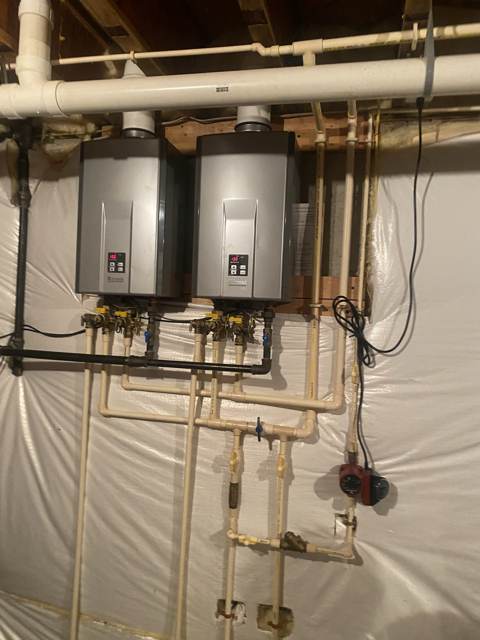
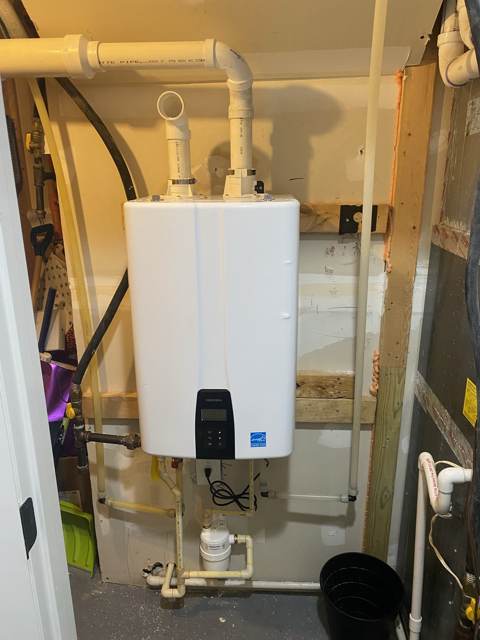
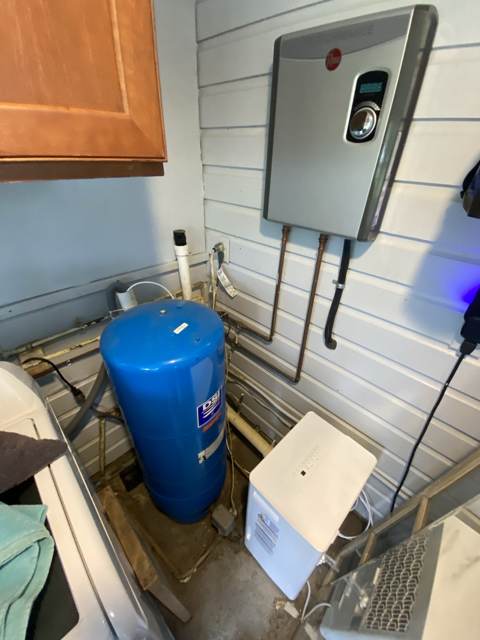
Our own installs, photographed by the crew on the job. Locations shown by town only.
Power-vent, direct-vent and heat-pump units
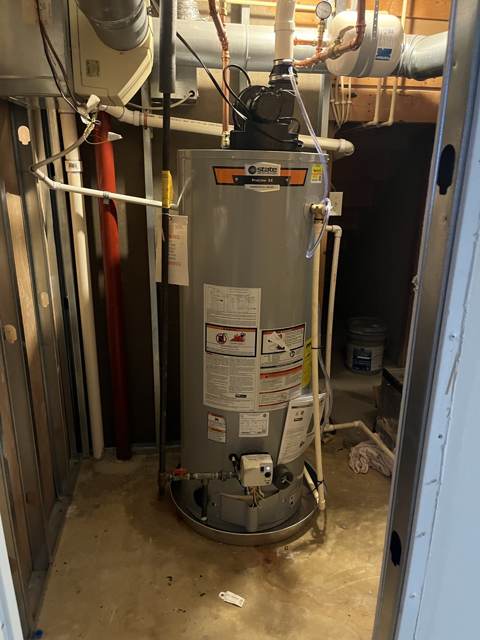
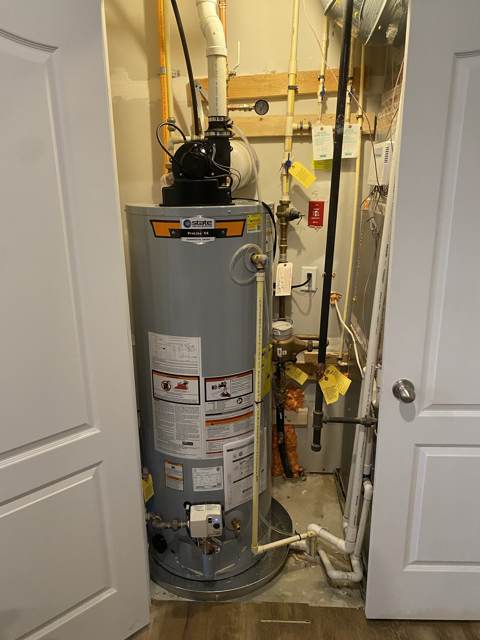
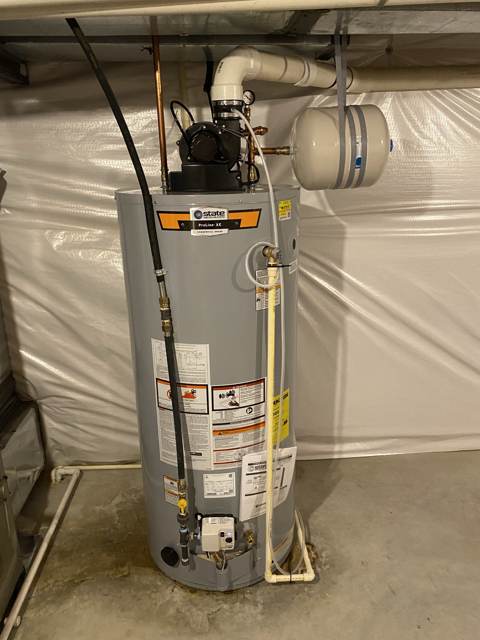
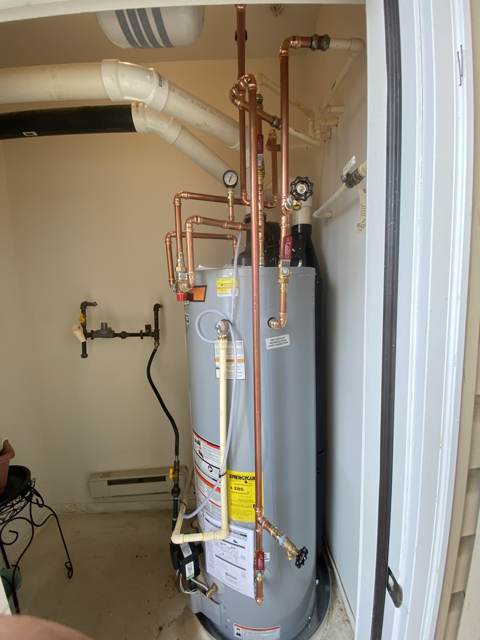
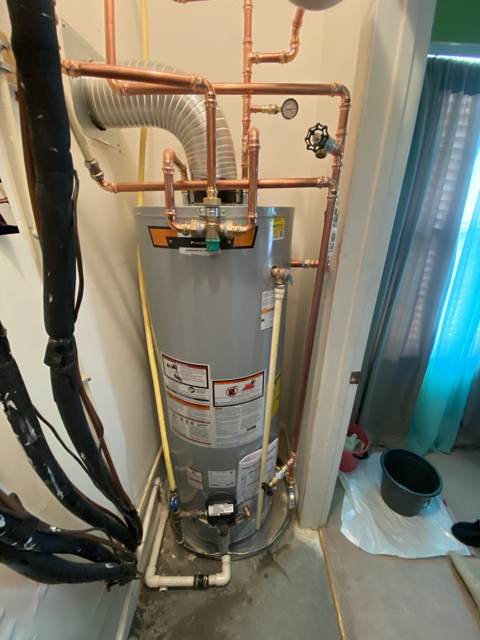
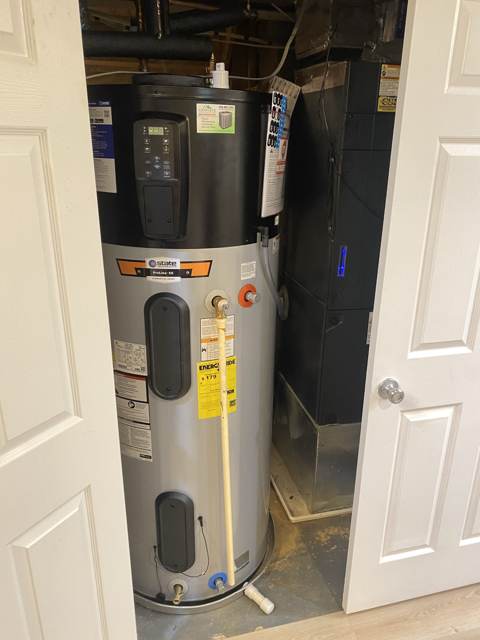
Our own installs, photographed by the crew on the job. Locations shown by town only.
About permits, pans and expansion tanks
This is where homeowners get taken advantage of, so here's the truth: it depends on your address.
Anne Arundel, Prince George's (through WSSC), Howard, Baltimore County and Baltimore City each enforce a different edition of the plumbing code, with their own amendments. Whether a water heater swap needs a permit, whether a drain pan is required, and whether your system needs a thermal expansion tank are answered differently in different jurisdictions — and sometimes differently for a replacement than for a new install.
We look up what your jurisdiction actually requires for your job and tell you. That includes telling you when something is not required, even though it's an item we could have sold you.
A.O. Smith verified contractor
Mayes is listed as a verified installing contractor with A.O. Smith. We install and service their equipment along with other major brands.
Standard tank replacements
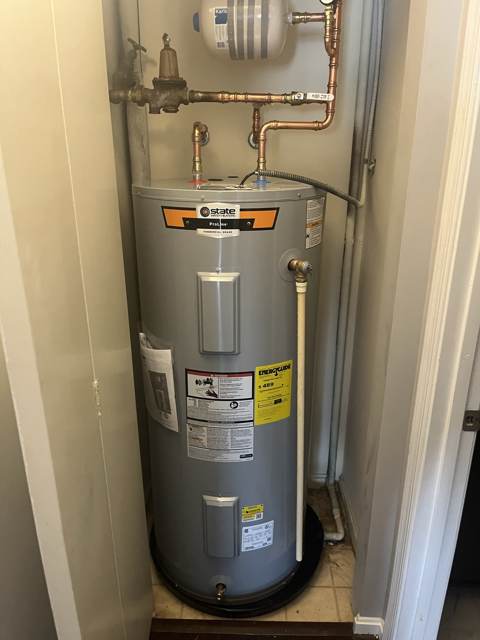
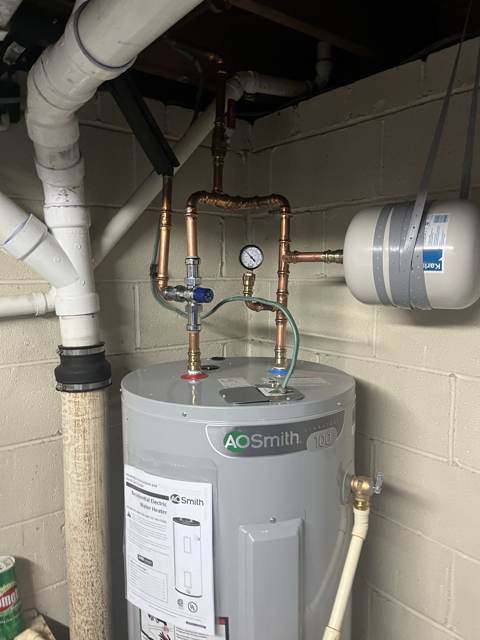
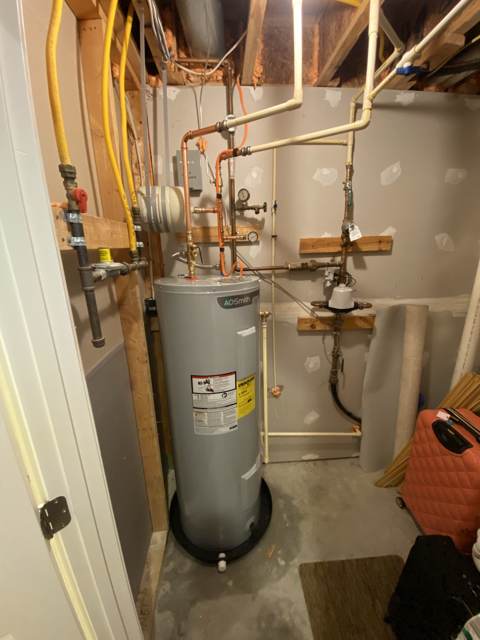
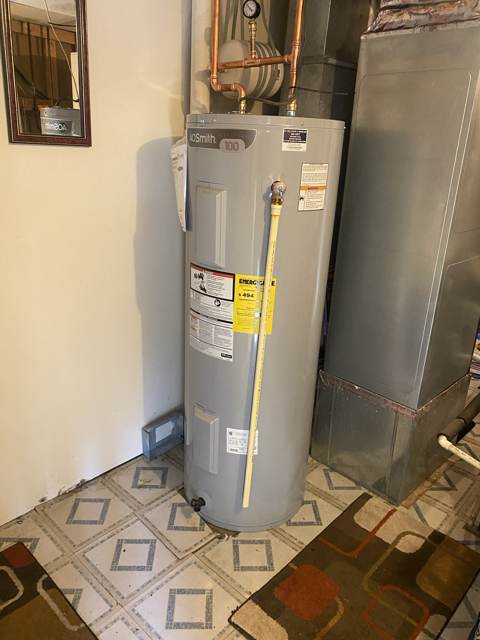
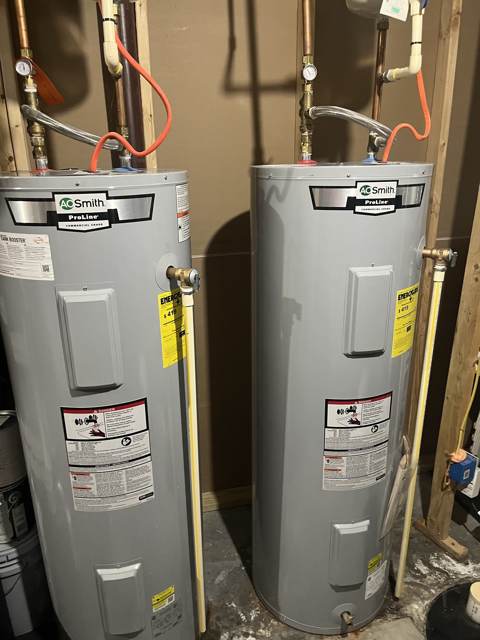
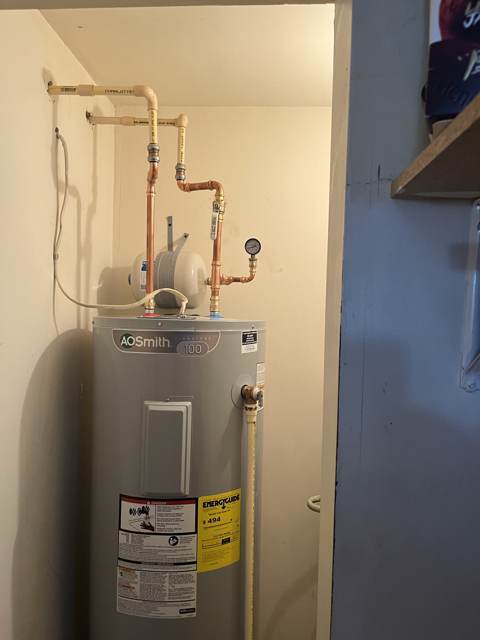
Our own installs, photographed by the crew on the job. Locations shown by town only.
Not sure whether yours is worth fixing?
Call us and describe what it's doing. Often we can narrow it down over the phone.
Call (410) 923-0510Frequently asked questions
How long should a water heater last?
Ten to twelve years is typical for a tank in Maryland. Well water and hard water shorten it; an anode rod replaced on schedule lengthens it. Tankless units routinely go longer if they're descaled.
My water heater is leaking. Is it an emergency?
Find the shutoff. If water is coming from the tank body, shut off the water supply to the heater and the gas or breaker, and call — any hour. If it's a slow drip from a valve or fitting, it can usually wait until the next morning — but don't ignore it.
Can I flush it myself?
On a healthy heater, yes, and it's good maintenance. On an old one, flushing sometimes dislodges sediment that was plugging a hole that was already there. If yours is over ten years old, it's worth having someone who can deal with what turns up.
Do you replace water heaters under home warranty?
Yes, regularly. Coverage depends on your specific contract and what caused the failure. We never add a trip charge on a warranty call.
What size do I need?
It's driven by how many people are in the house and how many fixtures run at once, not by square footage. We'll size it with you — going bigger than you need costs you money every month.